
Russell D & Associates
The Performance Brief
Edition No. 015 · November 2026
The jab is here to stay. The stack is not.
GLP-1 drugs have earned a permanent place in your members’ lives. The vials doing the rounds in the changing room have not. Clubs that cannot tell the two apart will lose the member, the margin, or both.
Asking whether peptides are a fad is the wrong question, and our industry keeps asking it anyway.
“Peptide” describes the size of a molecule. It says nothing about whether the thing works. Insulin is a peptide. So is semaglutide, the drug inside Ozempic and Wegovy. So is BPC-157, sold online as a research chemical with a label telling you not to put it in your body, which a growing number of gym regulars then inject.
Putting those in one bucket is how sensible operators end up with silly positions. Some dismiss the whole category as hype and miss the biggest shift in their market since the budget gym. Others get excited about all of it and let a trainer recommend an unregistered injection on the gym floor.
So here is the position this edition argues. The prescription drugs are here to stay, and they will change who walks through your door. The grey-market stack is the fad, and it carries real risk for any club that goes near it. The work for our industry sits in the gap between the two.
Fads do not get cheaper and arrive as a pill
Fashions burn out because demand fades. GLP-1 demand is heading the other way.
Gallup’s July 2026 survey found 11 in every 100 American adults currently taking one of these drugs to lose weight, up from 3 in 100 two years earlier. Fifteen in 100 have tried one. And they are walking into gyms. A William Blair survey of 300 users this year found gym membership rose about three points, to roughly 35 in 100, after people started the drug, and close to three quarters said they were exercising more often.
Supply is moving faster than demand. In March 2026 the core semaglutide patent expired in India, China and Brazil, following Canada in January. Indian generics launched within a day, at prices reported up to 80 per cent below the brand, and Dr. Reddy’s has already announced exports to Canada, Turkey and Brazil. A study of ingredient shipments estimated generic semaglutide could be produced for between $28 and $140 per person per year.
The needle is going too. Novo Nordisk launched a Wegovy pill in the United States in January. Eli Lilly’s Foundayo, a daily tablet with no food rules, won FDA approval on 1 April. Lilly’s next drug, retatrutide, has now succeeded in five late-stage trials by the company’s count and is due for FDA filing in early 2027.
Closer to home, Indonesia’s regulator BPOM approved Wegovy for weight management in June 2024 and marked Mounjaro’s local launch in July this year. Its announcement cited national survey data showing adult obesity rising from 21.8 to 23.4 per cent between 2018 and 2023. A Wegovy pen in a Jakarta pharmacy still costs between Rp3 million and Rp5.6 million, roughly a month of doses. That price is unlikely to hold once the generic makers in India and China turn to export.
Prices falling and pills arriving is not how a fad behaves.
The best argument for “fad”, and why it points at us
The strongest case against permanence is persistence. People stop.
Prime Therapeutics, which manages pharmacy benefits for Blue Cross plans in the United States, followed adults without diabetes who started a GLP-1 for weight loss. After three years, 8 in 100 were still taking it. Wegovy users did best, at about 14 in 100. Persistence in the first year has been improving, but most people still come off.
When they come off, the weight comes back. A January 2026 review in the BMJ pooled 37 studies and more than 9,300 adults. After stopping, people regained about 0.4 kg a month, roughly four times faster than people finishing a diet and exercise programme. On that trend they would be back at their starting weight in under two years. The authors are clear that the newest drugs have little follow-up past a year, so the far end of that curve is projected rather than observed.
Demand is holding. Adherence is not. Somebody will own the year after the prescription ends.
A sceptic reads that as a revolving door. I read it differently. Demand is holding. Adherence is not. That leaves a member who lost weight fast, probably lost some muscle with it, and is about to come off the drug with no plan. Somebody will own the year after the prescription ends. The question for this industry is whether that somebody is us.
What the gym can honestly claim
This is where operators need discipline, because the marketing is running ahead of the evidence.
The muscle worry is real and often overstated. A 2026 review in Diabetes, Obesity and Metabolism pooled randomised trials and found that roughly a third of the weight lost on semaglutide, and a quarter on tirzepatide, was lean mass. That is about the same share as ordinary dieting. “Lean mass” also counts water, organ and connective tissue, so the true muscle figure is smaller than the headlines suggest. The useful finding is the comparison. When dieting came with resistance training, lean mass fell to fewer than one kilo in every five lost.
The best evidence on life after the drug comes from Copenhagen. Researchers gave adults who had just lost weight one year of supervised exercise, the GLP-1 drug liraglutide, both, or a placebo, then followed them for a further year with no treatment at all. People who had only taken the drug regained about 6 kg more than those who had only exercised. The combination group kept the most off. Hold that result loosely. It covered a little over 100 people, on an older and weaker drug, in a well-run trial clinic.
One more finding from the BMJ review should worry anyone selling a “GLP-1 package”. General behavioural support alongside the medication did not slow regain once people stopped. A welcome pack and a monthly check-in will not do it. Coached strength training, built into a habit while the member is still on the drug, is the version with evidence behind it.
The other peptides are the fad
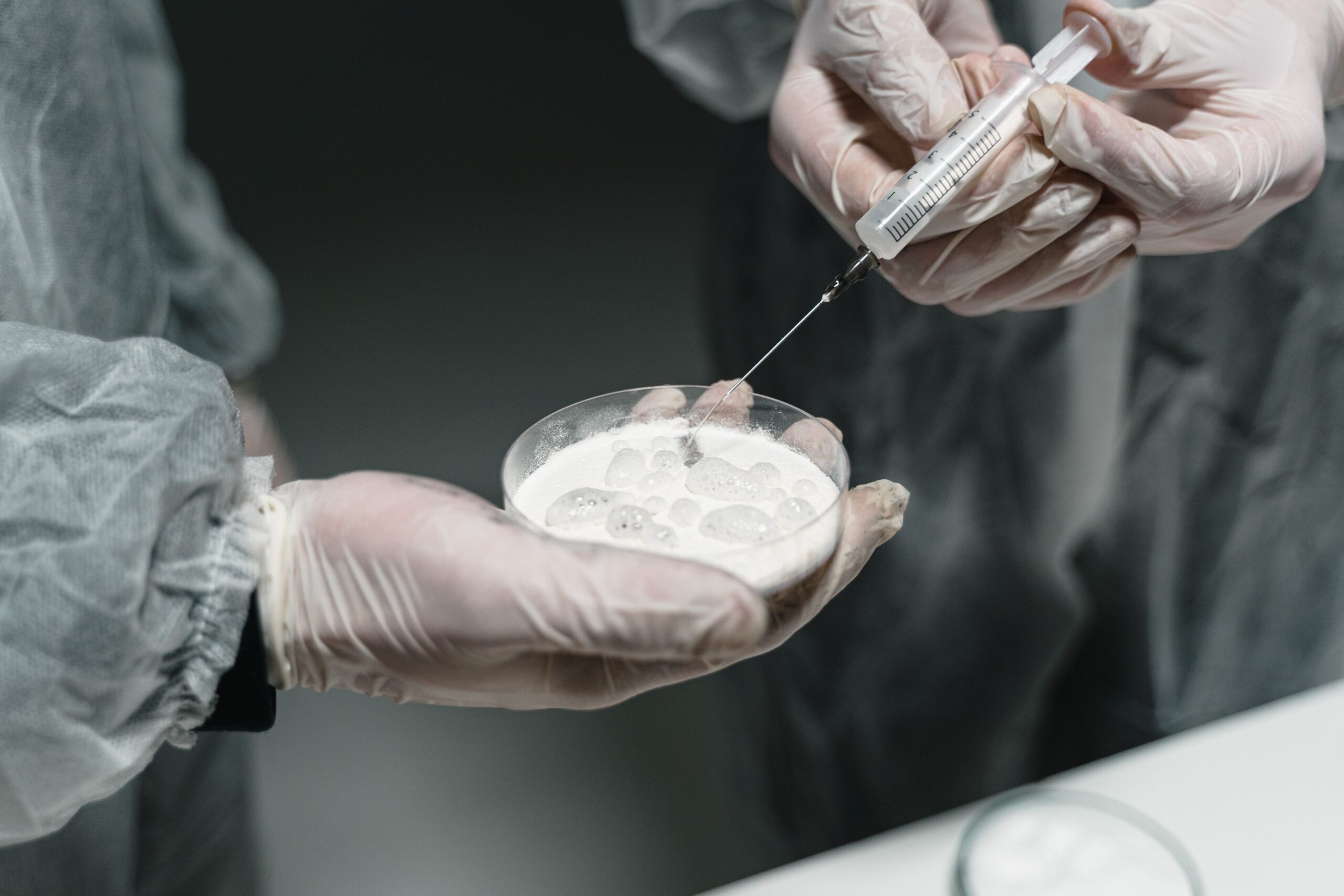
Now the stack. BPC-157, TB-500 and their cousins are sold as “research use only” and promoted across social media for injuries, recovery and anti-ageing. Retatrutide is being sold the same way, a year or more before any regulator has approved it.
In July a US FDA advisory panel voted 8 to 6 to let compounding pharmacies make BPC-157. Sellers announced it had been cleared. It had not. The vote is advisory, the FDA’s own staff had recommended against it, and the agency’s briefing noted that no approved BPC-157 product exists in any country. As of October no rule had been published. In Indonesia, injectable forms of these compounds are not registered medicines at all, and anti-doping rules ban them in sport.
Quality is the bigger problem. An April preprint analysed more than 6,000 independent lab tests on grey-market peptides. Depending on how strictly you score them, between four and seven samples in every ten failed basic quality checks, and 15 in 100 carried measurable bacterial toxins. The paper has not been peer reviewed, and buyers chose which samples to send for testing, so treat the exact figures with care. The direction is not in doubt.
This is where the reputational risk to clubs sits. A trainer who recommends a “recovery peptide” is handing an unregistered injection to a paying member under your brand. If it goes wrong, the trainer’s Instagram does not carry the liability. Your club does.
The standard worth setting
None of this asks a club to become a clinic. It asks operators to set four standards most can put in place this month.
Draw the line in writing. Coaches train the member who holds the prescription. They never advise on doses, side effects or switching drugs, and they never sell, stock or suggest a vial of anything. Put it in the staff handbook and the franchise operations manual, then check it is being followed.
Measure what the drug cannot fake. The scale will flatter everyone for six months. Body composition and simple strength tests tell the member whether they are keeping the muscle they will need at seventy, and give the club evidence that it earned its fee.
Programme for the bad days. Nausea, low appetite and lightheadedness are common in the early months on these drugs. A session that adjusts on those days keeps the member coming. One that forces the standard class on them loses them.
Sell the off-ramp. The member does not need you to help them lose weight on a GLP-1, because the drug is doing that. They need you for the year after they stop. Build that product, price it, and start the conversation on day one.
The commercial case fits on a napkin. A member who joins on the drug and leaves when the prescription ends is a short, cheap membership. A member who comes off the drug with a strength habit and a coach they trust is the most loyal customer you will ever have, because you are the reason the weight stayed off. Ask your finance lead what twelve extra months of dues and coaching from one member is worth. Then count the members who have told your front desk they started Mounjaro this year.
One question for your next team meeting
If a member on Mounjaro asked your front desk tomorrow what your club offers that the pharmacy does not, what would they hear? And could your coaches deliver it on a Tuesday morning, when that member feels sick and wants to go home?
Score your club against the four standards. The free GLP-1 Readiness Scorecard is twelve questions, two pages and about ten minutes with your GM or head coach. It shows which standard to fix first.
Get the free scorecard Free from Russell D & Associates. Unsubscribe at any time.References
The figures above are these sources in plain terms. The original numbers are below for anyone who wants to check the work.
- Gallup National Health and Well-Being Index, July 2026 (5,065 US adults). 11% currently taking a GLP-1 for weight loss, 15% ever, against 3% and 6% in 2024. Reported by The Washington Post, 7 July 2026.
- William Blair Equity Research, Fitness Clubs and GLP-1s: Proprietary Survey Suggests Continued Tailwinds, May 2026 (300 US GLP-1 users). Fitness club membership up about 300 basis points to 34.5% after starting medication. 72% reported exercising more frequently (2025 wave).
- Semaglutide patent expiry, India, China and Brazil, 20 March 2026, Canada January 2026. Abel + Imray, April 2026, and Reuters, 19 March 2026. Indian generic price cuts of up to 80% reported by NewsX, 2026.
- How Low Could Semaglutide Prices Fall? medRxiv preprint, March 2026. Production cost estimate of $28 to $140 per person-year for generic injectable semaglutide.
- Foundayo (orforglipron), FDA approval 1 April 2026. Oral Wegovy US launch, January 2026.
- Eli Lilly news release, 23 July 2026. Retatrutide TRIUMPH-1 (May 2026), TRIUMPH-2 and TRIUMPH-3 (July 2026) topline results. FDA submission planned Q1 2027.
- BPOM, Dukung Akses Terapi Inovatif Tirzepatide, 7 July 2026. Survei Kesehatan Indonesia 2023 adult obesity 23.4% (2018, 21.8%). Wegovy BPOM approval June 2024. Retail price Rp3,139,100 to Rp5,574,900 per pen, Halodoc, 2026.
- Prime Therapeutics, GLP-1 Therapy to Treat Obesity Among Members Without Diabetes: Three-Year Persistence, June 2025. Persistence 31.5% at 1 year, 15.1% at 2 years, 8.1% at 3 years (n = 5,780). Wegovy 14.3% at 3 years.
- West S, et al. Weight regain after cessation of medication for weight management: systematic review and meta-analysis. BMJ, 2026. 37 studies, 9,341 participants. Mean regain 0.4 kg/month (95% CI 0.3 to 0.5), projected return to baseline 1.7 years, regain faster than after behavioural programmes by 0.3 kg/month.
- Lean Mass Changes With Incretin Therapy Versus Lifestyle Intervention: A Systematic Review and Meta-Analysis of Randomised Controlled Trials. Diabetes Obes Metab 2026;28(6):4818-4827. Lean mass as share of weight lost: semaglutide 35.2%, tirzepatide 25.4%, lifestyle 26.2%, lifestyle plus resistance training 17.5%.
- Jensen SBK, et al. Healthy weight loss maintenance with exercise, GLP-1 receptor agonist, or both combined followed by one year without treatment. eClinicalMedicine, 2024. 109 participants at follow-up. Regain 6.0 kg greater after liraglutide alone than after supervised exercise.
- FDA Pharmacy Compounding Advisory Committee, 23 July 2026. BPC-157 vote 8 in favour, 6 against, 1 abstention. FDA briefing document, July 2026. No proposed rule in the Federal Register as of 2 October 2026.
- Evaluation of Research Grade Peptides Marketed Directly to Consumers Reveals Extensive Variability in Purity and Measured Abundance. Preprints.org, April 2026, not peer reviewed. 6,285 reports analysed, 41.6% to 71.1% failed basic quality criteria, endotoxin in 15% of samples.
- Alomedika, Peptida Suntik: Berbasis Bukti atau Penipuan, 2026 (BPOM registration status of injectable regenerative peptides).
Leave a Reply